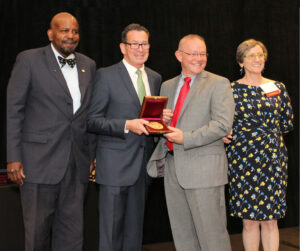
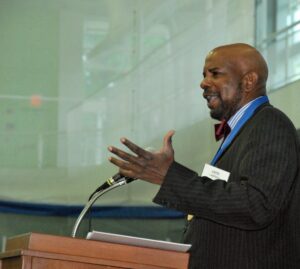
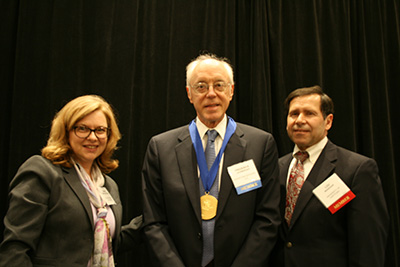
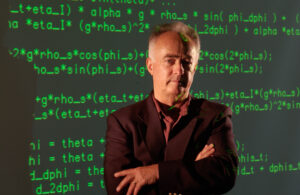
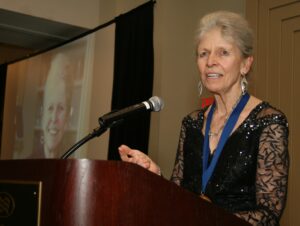
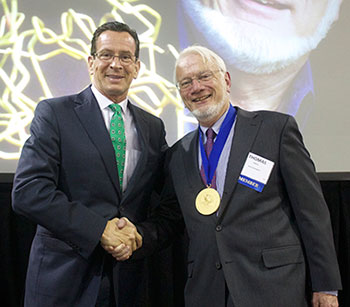
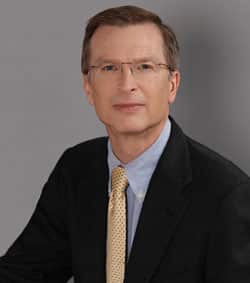
Steven L. Suib came from a family where “everything and everyone was believed to be important.” His parents emphasized respect—regardless of culture, religion or background—and, at times, brought hitchhikers home for a warm meal. His grandfather, an artist, travelled the world painting portraits of notable leaders, providing a role model for an independent, adventurous life. Growing up in rural northwestern New York State, Steve was introduced to the natural world by his father, an entomologist, as they canoed remote areas and collected butterflies or waited into the darkness of night to photograph moths. Steven’s earliest introduction to chemistry took place in the family’s garage, where he mixed formulas for his father’s pest control business. These unique and varied influences coalesced to form Professor Suib’s “interest in understanding the relationships between many different things and solving fundamental problems to create a better world.” Dr. Steven Suib is a Board of Trustees Distinguished Professor at the University of Connecticut and the 2011 recipient of the Connecticut Medal of Science Award.
During high school, Suib was mentored by two outstanding chemistry teachers: Nora Keyser and Nancy Rodriguez. They allowed him to work in the lab “making solutions, grading papers, setting up experiments, and generally learning about the field of chemistry.” Later, he attended the State University of New York at Fredonia, where, for a very brief time, he majored in music. During his freshman year, a geology elective convinced him to combine his passion for the outdoors with his interest in chemistry. A later turning point occurred when he performed research involving crystal growth of semiconductors and ways to study these materials. Steven graduated magna cum laude in 1975 with a double major in geology and chemistry. His initial plan was to teach high school, but encouraged by his advisor, Paul Weller, Suib pursued doctoral studies at the University of Illinois at Champaign Urbana, where he earned a PhD in chemistry and completed coursework equivalent to a master’s degree in geology.
For the past ten years, Professor Suib has headed the chemistry department at the University of Connecticut. His work focuses on developing new approaches to solve fundamental problems, specifically in the field of catalysis and materials science and involves the synthesis of novel porous semiconductors used to make new chemicals for use in lithium batteries, oil spills, and other applications. The central question Professor Suib asks is, “Can we make materials that no one else has made using relatively simple materials?” In his quest to “make new things,” Suib and his team are investigating the creation of synthetic fuels using carbon dioxide—a greenhouse gas—and water, research that could contribute to both reduced greenhouse gases and the development of alternative energy sources. Professor Suib states, “It’s not easy to find ways around Mother Nature” and that is where inorganic catalysts that mimic nature become crucial to producing key results. His research team is working closely with VeruTEK Technologies, Inc, a Connecticut company dedicated to “innovative green technologies,” to clean up contaminated industrial and commercial properties and landfills using microemulsion catalysis that converts hazardous and toxic compounds into harmless materials. Other current research involves synthesizing high temperature ceramic fiber composites used for aircraft engine parts.
Over the years Professor Suib has collaborated with industrial researchers in Connecticut such as United Technologies Research Center, Pratt and Whitney, Hamilton Standard, Olin, Yardney Technical Products, Pfizer, ATM, APSI, VeruTEK, Rogers Corporation, Uniroyal, Crompton and others. He is also the Head of the Pratt Center of Excellence in Ceramic Chemistry. These efforts have contributed immeasurably to Connecticut’s technological and economic development.
His advice to future generations is the same as his father gave to him – “recognize that everything is interrelated and important.” Professor Suib believes “if we can work hard, develop skills, and encourage creativity, then our most difficult problems can be solved.”

 Craig Crews is awarded for pioneering research that launched the pharmaceutical field of Targeted Protein Degradation (TPD). TPD is hailed as a new paradigm for drug development and will almost certainly lead to novel therapeutics. Described as an exceptionally creative scientist, with an eagerness to ask piercing, mechanism-based questions, and a commitment to evidence-based, first-rate, definitive science, he has had a profound translational impact in drug development.
 Connecticut Center for Advanced Technology (CCAT) is awarded the Connecticut Medal of Technology for its leadership of regional and national partnerships that assist the industrial base with the advancement of applied technologies and workforce initiatives to strengthen the global competitiveness of the manufacturing ecosystem in Connecticut.